
In This Blog
- Executive Summary (TL;DR)
- Emergent Software Earns Microsoft’s Support Services Designation
- Azure Platform Highlights
- Data & Analytics: Fabric IQ and Data Agents
- Licensing & Pricing Changes for 2026
- Security & AI Innovations
- Key Takeaways for 2026
- How Emergent Software Can Help
- FAQ: Ignite 2025
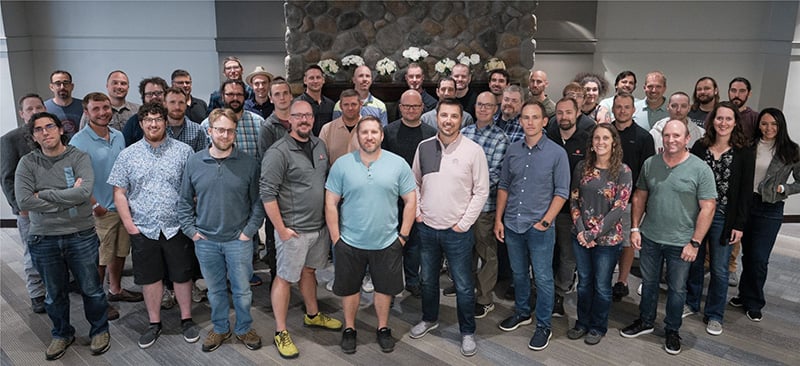
Last week, we hosted technology leaders from across the Twin Cities for our first annual Microsoft Ignite Recap Breakfast, held in our new downtown Minneapolis office. With our team attending Microsoft Ignite 2025 in San Francisco, our goal was to bring back the most impactful announcements across cloud, data, AI, security, and licensing, and translate them into meaningful takeaways for the year ahead.
This year’s Ignite was one of the most significant in recent memory, as Microsoft continued weaving AI deeply into the entire ecosystem. Below is a full recap of the insights shared at the Executive Tech Briefing by Jamie Anderson (CEO), Dan Rosenberg (Account Executive), Charlie Soukup (Director of Cloud Infrastructure), Jeremy Brewer (Azure Architect), Tom Parker (Director of Sales and Business Development).
TL;DR: Executive Summary
This section provides a high-level summary for busy readers. Expanded details and context are included in the full blog below.
Microsoft Ignite 2025 introduced major advancements across AI, cloud, data, security, and licensing. Key points include:
- AI is now embedded across every Microsoft product, including Copilot, Work IQ, Agent 365, Fabric IQ, and Security Copilot.
- Microsoft Fabric’s new semantic and agent capabilities (Fabric IQ + Data Agents) elevate analytics to business-aware intelligence.
- Azure Arc is becoming the unified control plane for hybrid and multicloud environments.
- Hot patching for Windows 11 and Windows 365 reduces disruptions, improves compliance, and enhances patch reliability.
- Azure Blob Storage Smart Tier automates storage tiering with no rehydration or retrieval fees.
- E5 now includes Security Copilot SCUs, lowering the barrier to adopting AI-driven SecOps.
- Copilot Chat continues expanding across Word, Excel, PowerPoint, and Outlook.
- Microsoft announced that Office suite price increases beginning July 2026.
- Emergent Software earned Microsoft’s new Support Services designation, one of only 30 partners worldwide to receive it.
This year’s Ignite signals a shift toward integrated AI governance, stronger hybrid management, and unified data ecosystems, trends that will shape organizational planning for 2026 and beyond.
A Major Milestone: Emergent Software Earns Microsoft’s New Support Services Designation
Microsoft announced a brand-new Support Services designation at Ignite. This is an exclusive certification awarded to partners who demonstrate exceptional capability and maturity in managed support.
This designation represents Microsoft’s strategy to channel customer support through highly capable partners, reducing the need for standalone Premier Support agreements.
Here’s why this matters:
- Emergent Software is one of only 30 partners globally to earn this designation at launch.
- It validates our investment in staff training, support processes, documentation, and customer outcomes.
- It strengthens our customers’ support experience directly through CSP, including prioritized escalation paths with Microsoft.
- Microsoft is expected to roll out additional partner benefits in 2026, enhancing this program even further.
For customers, it means one thing: working with Emergent Software provides a deeper, more integrated partnership with Microsoft than ever before.
Get in touch to explore how our Microsoft expertise can advance your business.
Azure Platform: Hybrid Management, Hot Patching, Smarter Storage & Reliability
Azure Arc: A Unified Approach to Hybrid and Multicloud Environments
Hybrid environments are here to stay, whether because of strategic multicloud decisions, legacy workloads, compliance requirements, or cost considerations. Azure Arc has become Microsoft’s answer for managing this complexity.
At the Executive Tech Briefing, we explored why Arc is becoming foundational:
What Azure Arc Enables:
- Single-pane-of-glass visibility across Azure, AWS, GCP, and on-prem systems.
- Centralized patching and update management, eliminating the need for multiple tools.
- Extended Security Updates (ESU) delivered through Arc for legacy systems that can’t be upgraded yet.
- Consistent governance and policy enforcement, no matter where infrastructure lives.
- Future “click-to-migrate” scenarios, bringing workload mobility across clouds.
Arc is fast becoming the universal control plane for hybrid cloud.
Windows Client Hot Patching: Security Without Disruption
Hot patching, once reserved for servers, is now available to Windows 11 Enterprise and Education users, as well as Windows 365 Enterprise devices.
This is a significant step forward for IT and security teams:
Why Hot Patching Matters:
- Security patches are applied without requiring a reboot during hot patch months.
- Compliance improves, especially for users who delay restarts.
- IT teams see higher patch success rates and fewer help desk tickets.
- Users experience less interruption and lost productivity.
It’s a small announcement with surprisingly large day-to-day benefits.
Cost Optimization: Practical Ways to Reduce Azure Spend
With cloud budgets under tighter scrutiny, organizations are looking for clear, reliable ways to control Azure spend. Microsoft emphasized a variety of practical approaches at Ignite, and we walked through them at our Executive Tech Briefing.
Core Optimization Options:
- Pay-As-You-Go: Best for variable or unpredictable workloads. Highest cost but maximum flexibility.
- Reserved Instances (1–3 years): Save up to 72% by committing to specific resources long-term.
- Savings Plans: A flexible alternative to RIs that saves up to 65% based on total organization-wide compute usage.
- Spot VMs: Ideal for interruptible workloads, offering up to 90% savings.
This gives organizations a toolkit for optimizing spend based on workload stability, predictability, and tolerance for interruption.
Azure Blob Storage Smart Tier: Intelligent, Automated Cost Savings
Storage is often one of the biggest, and quietest, contributors to Azure cost. Azure Blob Smart Tier is Microsoft’s answer to that.
This new tier automatically moves data between hot, cool, and cold based on usage patterns, with no rehydration, early deletion, or tier-change fees.
Why Smart Tier Is a Game Changer:
- Auto-tiering reduces costs without manual lifecycle policies.
- It eliminates the surprise charges historically associated with retrieval or rehydration.
- It continuously optimizes storage based on real usage, not assumptions.
- It’s an ideal default for most general-purpose storage accounts.
For customers with unpredictable data access patterns, this can drive immediate savings.
Reliability & Resiliency: Designing for Cloud Uptime
Microsoft continues investing in tools and frameworks to help customers architect for both uptime and recoverability. Two key frameworks were highlighted:
- Cloud Adoption Framework (CAF)
- Well-Architected Framework (WAF)
These frameworks now benefit from Copilot integration, helping teams catch misconfigurations, spot drift, and identify architectural improvements quickly.
The message is clear: resiliency is an ongoing practice, and Microsoft is giving teams more help than ever.
Data Engineering & Microsoft Fabric: Building an AI-Ready Data Estate
Fabric IQ: The Semantic Layer That Makes Data Understandable
Microsoft Fabric received some of the most groundbreaking updates of Ignite, especially with the introduction of Fabric IQ.
This feature creates an ontology—a shared understanding of business concepts—that AI agents and analytics tools can use to deliver more accurate insights.
What Fabric IQ Enables:
- Copilot and BI tools understand your business entities and definitions.
- Data relationships are enriched with business context.
- Structured and unstructured data is unified for deeper analysis.
- Business users can ask natural questions without specifying tables or columns.
This shifts analytics from field-driven exploration to semantic, business-driven intelligence.
Fabric Data Agents: Your Virtual Data Analyst
Fabric Data Agents build on the IQ layer by acting like a virtual analyst inside your data estate.
Capabilities Include:
- Reasoning across OneLake to produce insights.
- Synthesizing structured + unstructured content.
- Delivering business-aware responses (not generic answers).
- Integrating with AI Search for deeper document retrieval.
- Connecting to external systems via MCP endpoints.
This represents a major shift toward automated, on-demand analytics that scale with your business.
Licensing & Pricing Updates: What to Know Going Into 2026
Ignite brought several licensing and pricing changes that organizations should plan for early.
Copilot for Business (<300 Users)
A new $21/user/month SKU designed for smaller organizations with most of the functionality of Copilot for M365 Enterprise.
Copilot in GCC-High
Rolling out in phases beginning early 2026:
Phase 1: Core Copilot Chat, Work IQ, admin controls
Phase 2: GPT-5, image generation, code interpreter, connectors, and research capabilities
This is a major milestone for regulated and government environments.
Copilot Chat: New Features That Boost Everyday Productivity
Microsoft has made Copilot more accessible through:
- Direct Word/Excel/PPT integrations
- Outlook’s new Agent Mode
- Audio-based inbox and meeting recaps
- Enterprise Data Protection for free chat features
These updates remove barriers to adoption and help organizations ramp faster.
E5 Now Includes Security Copilot
Beginning in early 2026, Microsoft will include Security Copilot usage (SCUs) with E5 licenses:
- 400 SCUs/month per 1,000 users
- Up to 10,000 SCUs free
This dramatically reduces the cost of getting started with AI-powered SecOps.
Office Price Increases Coming July 2026
Most suites containing Office apps will increase by about $3/user/month starting July 2026.
Customers can mitigate cost increases by:
- Locking in multi-year commitments now
- Consolidating licensing
- Using a mix of monthly + annual terms
- Leveraging Microsoft-funded programs (implementation/adoption credits)
Security & AI: The New Era of Intelligent Defense
Work IQ: Personalized, Context-Aware AI
Work IQ acts as the intelligence layer behind Copilot, learning how each user works and adapting accordingly.
What It Learns:
- Collaboration patterns
- Writing style and tone
- Task and communication habits
- What “important” means to each user
- Workflow preferences across apps
This brings personalization to a level traditional software hasn’t reached.
Agent 365: Governance for the Age of AI Agents
As businesses begin building agents to automate workflows, they need oversight to avoid shadow automation, cost overruns, and policy misalignment.
Agent 365 provides:
- A single management plane for all agents
- Visibility into cost consumption
- Policy assignment and governance
- Lifecycle controls and auditing
Think of it as the “Active Directory for AI agents.”
Human in the Loop: Safer Automation
This new feature adds a structured approval step for agents, allowing them to pause and ask for confirmation when:
- Confidence is low
- Data is missing
- Policies are triggered
- High-impact decisions are involved
This ensures automation stays safe, transparent, and controllable.
Security Copilot: AI-Assisted SecOps at Scale
Security Copilot is transforming the SOC by automating investigation, correlation, and reporting tasks that previously required significant analyst time.
What Security Copilot Does:
- Correlates logs across Microsoft + 35+ third-party tools
- Generates mitigation plans and incident timelines
- Reduces investigation time by an estimated 40%
- Enhances junior analyst productivity
- Produces executive-ready reports in seconds
With SCUs bundled into E5, organizations can take advantage of this far more easily.
Key Takeaways for 2026
- AI is more than a feature. It’s an integrated strategy.
- Data is becoming semantic, intelligent, and unified.
- Hybrid cloud is here to stay, and Arc is central to it.
- Security operations are shifting to AI-assisted workflows.
- Licensing changes require proactive planning.
How Emergent Software Can Help
We’re supporting organizations across the Midwest and beyond in navigating these changes with:
- AI & Copilot Workshops
- Data Estate Assessments
- Azure Cost Optimization Reviews
- Security Copilot & Defender Workshops
- Licensing Strategy & Budget Planning
- Azure Arc Proof-of-Concepts
If any of these topics sparked ideas or concerns, we’d love to continue the conversation.
FAQ: Ignite 2025
1. What were the most important themes from Microsoft Ignite 2025?
The dominant theme was AI as a native, integrated layer across every Microsoft product, not a standalone feature. Microsoft introduced major expansions to Copilot, deeper personalization through Work IQ, enterprise-grade governance with Agent 365, and significant advancements to Microsoft Fabric through Fabric IQ and Data Agents. These updates reinforce Microsoft’s strategy to create a unified, AI-ready ecosystem where data, security, applications, and infrastructure operate through intelligent, interconnected services. Organizations should expect AI adoption, governance, and operational readiness to be top priorities throughout 2026 and beyond.
2. What does Microsoft’s new Support Services designation mean for organizations working with Emergent Software?
This new designation is Microsoft’s way of identifying partners capable of delivering high-quality support that aligns with Microsoft’s own operational standards. Being one of only 30 partners globally to achieve this status means that Emergent Software has met rigorous requirements around service quality, staff readiness, escalation processes, and customer outcomes. For customers, this translates to faster and more effective issue escalation, access to deeper Microsoft expertise through our CSP relationship, and priority handling of support cases. As Microsoft expands partner capabilities tied to this designation in 2026, customers working with Emergent Software will receive increasing value from this recognition.
3. How should organizations prepare for the July 2026 Microsoft licensing price increases?
Most organizations will benefit from planning well in advance. Because the increases affect suites containing Office desktop applications, renewal cycles and commitment lengths will play a significant role in budgeting. Best practices include securing multi-year pricing agreements before July 2026, reviewing whether all users need Office desktop apps, consolidating redundant licensing, and optimizing workloads to ensure the right mix of monthly and annual commitments. Working with a CSP such as Emergent Software can also provide access to Microsoft funding programs to offset project or adoption costs. Early planning can reduce or eliminate the financial impact for many organizations.
4. Is Microsoft Fabric mature enough for enterprise adoption in 2025–2026?
Yes. With the introduction of Fabric IQ, Data Agents, improved governance, and deeper integration with Microsoft 365 and Azure AI services, Fabric has reached a level of maturity suitable for enterprise production workloads. Fabric now provides a single, unified data foundation with built-in analytics, governance, and semantic understanding across structured and unstructured data. Organizations that currently manage disparate data tools, duplicated semantic models, or inconsistent analytics workflows will likely see significant operational and strategic benefits from modernizing with Fabric. The platform is stable, well-supported, and aligned with Microsoft’s long-term vision for the data estate.
5. How can organizations evaluate whether Copilot, Work IQ, or AI agents should be adopted in 2026?
The best starting point is understanding your organization’s data readiness, security posture, governance model, and workflow maturity. Copilot and Work IQ offer substantial productivity gains, but the quality of those gains depends on having well-structured data, identity governance through Entra, and policies ensuring safe use of generative AI. AI agents introduce even greater automation potential but require visibility, lifecycle management, and cost controls, which Microsoft now provides through Agent 365. Most organizations begin with a readiness assessment or workshop focused on:
- Business use cases
- Data accessibility and semantic structure
- Security boundaries
- Governance frameworks
- Licensing and budget planning.
This helps create a phased roadmap so AI adoption delivers measurable value rather than becoming fragmented or uncontrolled.