
Blog Graphics (46)

Why Your AI Strategy Fails Without a Unified Data Access Layer

Most AI initiatives don’t fail because of the model itself. They fail because enterprise data access becomes fragmented, inconsistent, and impossible to scale cleanly. In this blog, Aaron Varga explains why unified data access architecture is becoming the foundation for successful enterprise AI strategies — and how approaches like MCP are helping organizations move beyond disconnected pilots toward scalable, production-ready AI systems.


Blog Graphics (47)

From Copilot to Agent 365: What Changes in the Microsoft E7 AI Stack

Artificial intelligence inside Microsoft 365 is evolving quickly. What started as AI-assisted productivity through Microsoft Copilot is rapidly becoming something much bigger: organizations deploying AI agents that can take action, automate workflows, coordinate tasks, and operate like digital teammates. That shift is exactly why Microsoft introduced Microsoft 365 E7.

Blog Graphics (43)

Demystifying Microsoft 365 E7: What It Actually Changes for Your Organization

Microsoft 365 E7 is not just another licensing bundle. It represents Microsoft’s vision for an AI-enabled workplace built around “frontier workers,” AI agents, identity-driven security, and autonomous workflows. While E3 focused on productivity and E5 expanded security and compliance, E7 is designed to support organizations moving toward AI-native operations.

data access layer

What Is MCP, and Why It Matters for Scalable Enterprise AI

Most organizations think scaling AI is primarily about choosing the right model. In reality, the bigger challenge is giving AI systems reliable, secure, governed access to enterprise data. That’s where MCP, or Model Context Protocol, comes in.

Vibe Coding - person creating code on computer

The Legitimacy of Vibe Coding in Enterprise Software Development

Vibe coding lets you build working software fast, with minimal planning and no formal specifications. That makes it a powerful tool for discovery, prototyping, and early alignment — and a risky one if those prototypes quietly become production systems. The teams that get this right don't debate whether it's real engineering. They know when to vibe and when to apply enterprise rigor.

What an "A" Codebase Looks Like-Checklist

What an “A” Codebase Looks Like: A Checklist from Our Custom Software Assessment

Most codebases don't fail dramatically, they degrade gradually. At Emergent Software, our Custom Software Codebase Assessment uses a combination of automated tooling and senior engineer review to evaluate architecture, security, maintainability, and technical debt. Here's what separates an "A" codebase from the rest, and where to start if you want to improve.

Technology-Custom-Software-Tools

Before You Build: A Practical Guide to Approaching AI the Right Way

Not every business problem needs an AI solution — but the ones that do deserve a thoughtful approach. Principal Software Architect Aaron Varga shares a practical framework for evaluating AI readiness, navigating the build vs. buy decision, and avoiding the pitfalls that derail most AI projects.

About Emergent Software

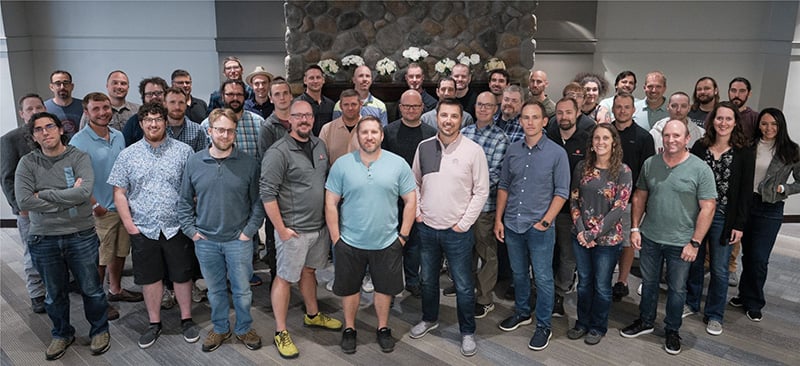
Emergent Software offers a full set of software-based services from custom software development to ongoing system maintenance & support serving clients from all industries in the Twin Cities metro, greater Minnesota and throughout the country.

Learn more about our team.

Let's Talk About Your Project

Contact Us