

In This Blog
TL;DR
Traditional annual product roadmaps often become outdated quickly as markets, customer expectations, and business priorities change.
Organizations should establish strategic goals while remaining flexible about how and when solutions are implemented.
Agile concepts like the "last responsible moment" help teams make better decisions using current information rather than assumptions.
Customer feedback, testing, and real-world usage data should guide prioritization and feature development.
A strong development partner helps organizations balance long-term strategy with short-term execution.
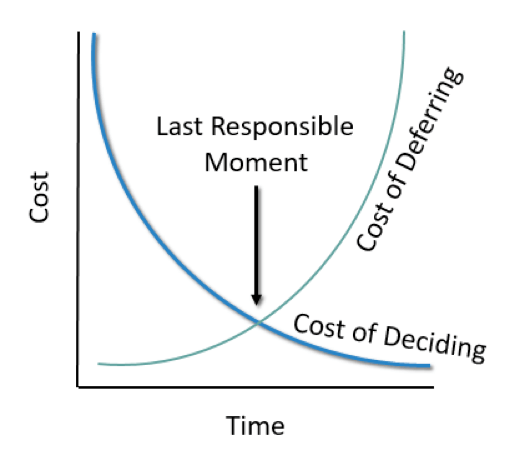
Image source: Timeless Agility
The pace of business continues to accelerate.
Customer expectations evolve quickly. Markets shift unexpectedly. New technologies emerge constantly. What seemed like the right product strategy in January may no longer be the right strategy by June.
Yet many organizations still approach product planning the same way they have for years. They spend weeks building detailed annual roadmaps, carefully prioritizing projects and features for the next twelve months.
Then something changes.
The market moves in a different direction. Customer priorities shift. A competitor launches a new feature. Internal business goals evolve.
Suddenly, a roadmap that looked perfect at the beginning of the year feels disconnected from reality.
This doesn't mean planning is no longer important. It simply means that successful organizations approach planning differently than they used to.
Is Goal Setting Dead?
Absolutely not.
Business goals remain incredibly important.
Organizations still need to identify opportunities, understand challenges, and establish a strategic direction for their products and platforms.
The difference is that modern product planning should be viewed as a living process rather than a one-time annual event.
Too often, companies create yearly goals in January and then rarely revisit them. In some cases, teams become so committed to the original plan that they continue executing initiatives even after market conditions have changed.
A more effective approach is to treat road mapping as an ongoing exercise.
Your goals should provide direction, but they should not lock you into decisions before you have enough information to make them confidently.
In other words, define where you want to go, but remain flexible about how you get there.
The Last Responsible Moment
One of the most valuable concepts in Agile product development is the idea of the last responsible moment.
The last responsible moment refers to the latest point at which a decision can be made without negatively impacting outcomes.
Rather than making decisions far in advance based on assumptions, teams delay certain decisions until they have the information necessary to make the best choice.
This approach helps organizations avoid:
Building features nobody wants
Solving the wrong problems
Overcommitting to outdated plans
Investing resources based on assumptions instead of evidence
In rapidly changing markets, this flexibility can become a major competitive advantage.
By waiting until the last responsible moment, organizations can make decisions using actual customer data instead of predictions.
That often leads to better outcomes and more efficient use of development resources.
Using Customer Data to Drive Decisions
Today's digital products generate more customer data than ever before.
Organizations can track user behavior, run experiments, monitor engagement, and gather feedback continuously.
Because of this, product teams no longer need to rely solely on assumptions when prioritizing future enhancements.
Companies like Amazon, Netflix, and Google have built much of their success around continuous testing and optimization.
Rather than releasing large batches of features on a rigid schedule, they consistently evaluate user behavior and make incremental improvements based on real-world data.
This approach allows them to:
Identify customer pain points faster
Validate ideas before large investments
Reduce development risk
Deliver value more frequently
Customers increasingly expect rapid improvements and quick responses to their needs.
Organizations that can react quickly often outperform those relying solely on long-term planning cycles.
How a Development Partner Supports Road Mapping
While flexibility is important, organizations still need a strategic framework to guide decision making.
This is where a trusted development partner can provide significant value.
A strong development partner helps organizations:
Clarify business goals
Evaluate technical feasibility
Identify potential risks
Prioritize initiatives
Adjust plans as conditions change
Because experienced software teams have worked across many industries and projects, they often bring valuable perspectives that internal teams may not have considered.
They can help challenge assumptions, uncover opportunities, and identify potential roadblocks before they become expensive problems.
The result is a roadmap that remains grounded in business objectives while maintaining enough flexibility to adapt as circumstances evolve.
Balancing Long Term Vision with Short Term Execution
Flexibility does not mean abandoning long-term planning.
In fact, some of the most successful product organizations maintain a clear long-term vision while remaining flexible about implementation details.
Consider a business that wants to eventually add e-commerce capabilities to its website.
That goal may be several months or even years away.
However, making the development team aware of that future direction today allows them to make smarter decisions along the way.
Even if the organization has not fully defined the future e-commerce experience, understanding that goal helps influence:
Architecture decisions
Technology selection
Platform scalability planning
Future budget discussions
This allows teams to prepare for future growth without prematurely committing to detailed feature requirements.
Strategic goals provide direction. Ongoing customer feedback and market data help determine execution.
The Biggest Differentiator in Product Success
Ultimately, the organizations that succeed are often the ones that adapt the fastest.
Markets change.
Customer expectations change.
Technology changes.
Your ability to respond to those changes is often more important than how accurately you predicted them a year earlier.
Agility has become one of the most valuable business capabilities organizations can develop.
That doesn't mean abandoning strategy.
It means combining strategic vision with operational flexibility.
Let your goals guide you, but allow yourself to adjust your path as new information becomes available.
That balance between planning and adaptability is often what separates successful products from stagnant ones.
How Emergent Software Can Help
Emergent Software helps organizations align technology investments with business goals through product strategy, software development, cloud solutions, and ongoing advisory services. Our team works alongside clients to prioritize initiatives, evaluate opportunities, adapt to changing market conditions, and build scalable solutions that deliver measurable business value. If this sounds familiar, we can help.
Final Thoughts
Product roadmaps remain important, but the way organizations use them is changing.
The most successful teams understand that roadmaps should provide direction, not rigid instructions.
By combining long-term strategic goals with data-driven decision making and ongoing flexibility, organizations can respond more effectively to customer needs and changing market conditions.
If you're looking for a technology partner to help guide product strategy, prioritize development investments, and deliver business value faster, reach out to our team. We'd love to learn more about your goals.
Frequently Asked Questions
What is a product roadmap?
A product roadmap is a strategic planning tool that outlines the direction, priorities, and goals for a product over time. It helps organizations align business objectives with development efforts. Modern roadmaps are often designed to be flexible rather than rigid. They provide guidance while allowing teams to adapt to changing customer and market needs. Effective roadmaps focus on outcomes rather than locking teams into fixed feature lists.
What is the last responsible moment?
The last responsible moment is an Agile concept that encourages teams to delay decisions until the latest point possible without creating negative consequences. This allows organizations to make decisions using the most current information available. By waiting until additional data is available, teams often make better choices and reduce risk. The concept helps organizations avoid acting on outdated assumptions. It is commonly used in Agile product development and project management.
Why shouldn't product roadmaps be fixed?
Markets, customer expectations, technology, and business priorities can change quickly. A roadmap created at the beginning of the year may no longer reflect current realities several months later. Fixed roadmaps can lead teams to invest in solutions that no longer provide value. Flexible roadmaps allow organizations to adapt based on customer feedback and market conditions. This often leads to better business outcomes and more efficient use of development resources.
How does customer data improve product planning?
Customer data helps organizations make decisions based on evidence rather than assumptions. Analytics, user feedback, testing, and behavioral data can reveal what customers actually need and value. This information allows product teams to prioritize improvements more effectively. Organizations can validate ideas before making large investments. Data-driven planning often reduces risk and improves product outcomes.
How often should organizations revisit their roadmap?
There is no universal answer, but many successful organizations review their roadmaps quarterly or even monthly. Frequent review cycles allow teams to adjust priorities based on customer feedback, market changes, and business goals. The roadmap should be treated as a living document rather than a static plan. Regular reviews help ensure investments remain aligned with current realities. Flexibility is often more important than perfect forecasting.
How can a software development partner help with road mapping?
A software development partner can provide technical expertise, strategic guidance, and outside perspective throughout the planning process. Experienced teams help organizations evaluate opportunities, prioritize initiatives, identify risks, and align technology decisions with business goals. They also help ensure future plans remain technically feasible and financially realistic. Development partners can support both long-term strategy and day-to-day execution. This often leads to better planning and stronger business outcomes.
Author



Let’s Start Building Together
Whether you're modernizing legacy apps, strengthening your cloud security, or planning your next big initiative, Emergent Software is here to help.