

In This Blog
TL;DR
Progressive Web Applications (PWAs) combine the accessibility of a website with many of the features users expect from mobile apps.
PWAs can work offline, be installed on devices, and provide a consistent experience across multiple platforms.
Compared to native mobile apps, PWAs are often less expensive to build and maintain.
PWAs are SEO-friendly and can be discovered through search engines like traditional websites.
They are ideal for organizations that want broad device compatibility without maintaining separate mobile applications.
Web and mobile applications have become a central part of everyday life.
We use them to manage finances, communicate with friends and family, access business systems, shop online, and much more.
As user expectations continue to evolve, businesses are looking for ways to deliver app-like experiences without the complexity and cost of building multiple native applications.
That's where Progressive Web Applications (PWAs) come in.
PWAs combine the best aspects of websites and mobile applications, creating fast, responsive experiences that work across devices and can even function when internet connectivity is limited.
At Emergent Software, we're big fans of PWAs because they allow organizations to deliver consistent experiences to both customers and employees while simplifying development and maintenance.
What Is a Progressive Web Application?
A Progressive Web Application is essentially a website that behaves like a mobile application.
Users can often recognize a PWA when they see options such as:
Add to Home Screen
Install App
Launch from Device Home Screen
Unlike traditional websites, PWAs can continue functioning even when internet connectivity is unavailable.
Once content has been downloaded, users can continue accessing portions of the application offline.
PWAs are designed to be:
Responsive
Device-independent
Installable
Search engine friendly
Accessible through standard web URLs
Organizations often choose PWAs when they need mobile-friendly experiences that remain usable in environments with unreliable internet access.
For example, field workers, sales representatives, transportation teams, and healthcare professionals frequently operate in locations where connectivity can be inconsistent.
How Progressive Web Applications Work
PWAs rely on two key technologies that allow them to function more like mobile applications.
Manifest Files
A manifest file contains information that allows the website to be installed on a user's device.
Typical information includes:
Application name
Start URL
Icons
Theme colors
Display settings
This information allows the PWA to appear and behave more like a native application.
Service Workers
Service workers enable offline functionality.
These background processes sit between the web browser and the network connection, managing how data is requested and stored.
They can:
Cache content locally
Enable offline experiences
Improve performance
Manage background updates
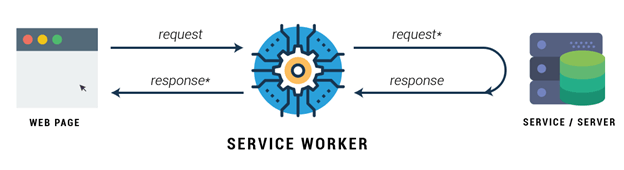
Together, these technologies allow a website to provide many of the capabilities traditionally associated with mobile applications.
Benefits of Progressive Web Applications
Many organizations choose PWAs because they offer an attractive balance between functionality, cost, and maintainability.
1. Lower Development Costs
Building a website is typically less expensive than building separate native applications for iOS and Android.
Since a PWA uses standard web technologies, organizations can often achieve their goals without maintaining multiple codebases.
2. SEO Friendly
Unlike traditional mobile applications, PWAs can be indexed by search engines.
This allows organizations to benefit from:
Organic search traffic
Improved discoverability
Direct URL sharing
Brand visibility
The same SEO strategies used for websites can often be applied to PWAs.
3. Broader Device Compatibility
PWAs work across multiple devices and operating systems.
Instead of creating separate applications for different platforms, organizations can provide a consistent experience to a wider audience.
4. Easier Maintenance
Because PWAs are built using standard web technologies, they are often easier to update and maintain.
New features can be deployed quickly without requiring users to download application updates through app stores.
Organizations also benefit from a larger pool of web developers compared to platform-specific mobile developers.
5. Greater Longevity
Technology platforms come and go.
Native and hybrid application frameworks occasionally become obsolete, forcing organizations to invest in costly migrations.
Because PWAs are fundamentally websites, they generally have a longer lifespan and are less dependent on the success of a specific platform.
Native vs Hybrid vs Progressive Web Applications
Many people assume all mobile applications are built the same way.
In reality, there are several approaches.
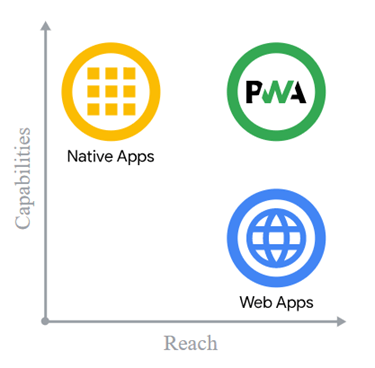
Native Applications
Native applications are built specifically for a particular platform, such as iOS or Android.
Advantages include:
Maximum performance
Full device feature access
Excellent user experience
The drawback is cost.
Supporting multiple platforms often requires separate development teams and codebases.
Frameworks That Compile to Native
Technologies such as:
React Native
Xamarin
Flutter
Allow developers to write code once and deploy to multiple platforms.
These frameworks reduce development effort while maintaining many native capabilities.
Hybrid Applications
Hybrid applications use web technologies such as HTML, CSS, and JavaScript but run inside a native container.
They provide access to device features while maintaining a largely web-based architecture.
However, they generally do not perform as well as native applications.
Progressive Web Applications
PWAs work across devices using standard web technologies.
They offer broad compatibility, simplified maintenance, and lower development costs.
Modern browsers continue expanding their capabilities, enabling PWAs to support features such as:
Push notifications
Offline access
Device vibration
Background synchronization
If you're curious about what modern browsers can support, What Can the Web Do Today is an excellent resource.
Real World PWA Examples
We've helped organizations leverage PWAs to solve real business challenges.
Offline Sales Application for a Medical Device Company
We developed an offline sales application that allowed medical device representatives to access presentations and sales materials even when working in areas with poor connectivity.
Once connectivity returned, the application synchronized new content automatically.
Offline Reporting Application for a Transportation Company
We also built a PWA for truck drivers that allowed them to track:
Driving times
Invoices
Delivery information
Load details
The application continued working while drivers were offline and synchronized information once connectivity was restored.
These are excellent examples of scenarios where PWAs provide significant business value.
When Should You Build a PWA?
PWAs are often a great choice when:
You need cross-platform compatibility
Offline functionality is important
SEO matters
You want lower development costs
You need faster deployment and maintenance cycles
However, if your application depends heavily on device-specific features that are only available through native APIs, a native application may still be the better option.
The best approach depends on your business goals, users, and technical requirements.
How Emergent Software Can Help
Emergent Software helps organizations design and develop custom web applications, mobile applications, progressive web applications, and cloud-based software solutions. Our team works closely with clients to determine the right technology approach based on business goals, user requirements, scalability needs, and long-term support considerations. If this sounds familiar, we can help.
Final Thoughts
Progressive Web Applications offer a compelling middle ground between websites and native mobile applications.
They provide broad accessibility, offline functionality, strong SEO benefits, and simplified maintenance while reducing development costs.
For many organizations, a PWA can deliver exactly the experience users need without the complexity of managing multiple native applications.
If you're considering a mobile or web application project, reach out to our team. We'd love to discuss the best approach for your goals.
Frequently Asked Questions
What is a Progressive Web Application (PWA)?
A Progressive Web Application is a website that provides many of the same experiences as a mobile application. PWAs can be installed on devices, work offline, and provide responsive user experiences across multiple platforms. They are built using standard web technologies such as HTML, CSS, and JavaScript. PWAs combine the accessibility of websites with the functionality of mobile apps. Many organizations use them to reach users across multiple devices efficiently.
Can Progressive Web Applications work offline?
Yes. One of the primary benefits of a PWA is its ability to function when internet connectivity is unavailable or unreliable. This capability is enabled through service workers that cache content and manage data requests. The exact offline functionality depends on how the application is designed. Many organizations use PWAs specifically because of their offline capabilities. This feature is especially valuable for field workers and mobile teams.
Are PWAs better than native mobile apps?
Not necessarily. The best choice depends on your requirements. PWAs offer lower development costs, broader compatibility, and easier maintenance. Native applications generally provide maximum performance and access to all device features. Organizations should evaluate user needs, functionality requirements, and budget considerations before choosing an approach. In many cases, PWAs provide an excellent balance between capability and cost.
Can PWAs be found through Google search?
Yes. Unlike traditional mobile applications, PWAs are websites and can be indexed by search engines. This allows organizations to benefit from search engine optimization strategies and organic traffic. Users can discover PWAs through standard web searches and access them directly through URLs. This discoverability is one of the major advantages of PWAs. It helps improve visibility and user acquisition.
What technologies are used to build PWAs?
PWAs are built using standard web technologies such as HTML, CSS, and JavaScript. Additional components such as manifest files and service workers provide installation and offline capabilities. Because they use common web technologies, many web developers can build and maintain PWAs. This often reduces development complexity compared to native applications. Modern browser capabilities continue expanding what PWAs can do.
When should a company choose a Progressive Web Application?
Organizations often choose PWAs when they need broad device support, offline functionality, SEO benefits, and lower development costs. They are particularly useful when users access applications in environments with inconsistent internet connectivity. PWAs can also be an excellent option when maintaining multiple native applications would be cost prohibitive. Every project should be evaluated individually. The best solution depends on business and technical requirements.
Author



Let’s Start Building Together
Whether you're modernizing legacy apps, strengthening your cloud security, or planning your next big initiative, Emergent Software is here to help.