

How Custom Software Development Solutions Can Help You Solve Complex Business Problems
October 6, 2021
In This Blog
TL;DR
Custom software should solve business problems, not simply add technology.
Successful software projects start by understanding the problem before proposing solutions.
Requirements, constraints, and success criteria help shape the best solution.
The most valuable solution balances business impact with implementation cost.
Ongoing validation throughout development ensures the final product delivers the intended outcome.
Every custom software project begins with a problem.
Sometimes an organization has a process that takes too much time. Sometimes data is difficult to access. Sometimes a critical business application no longer supports the needs of the business.
Whatever the challenge may be, the goal of custom software development is not simply to build software.
The goal is to solve a business problem.
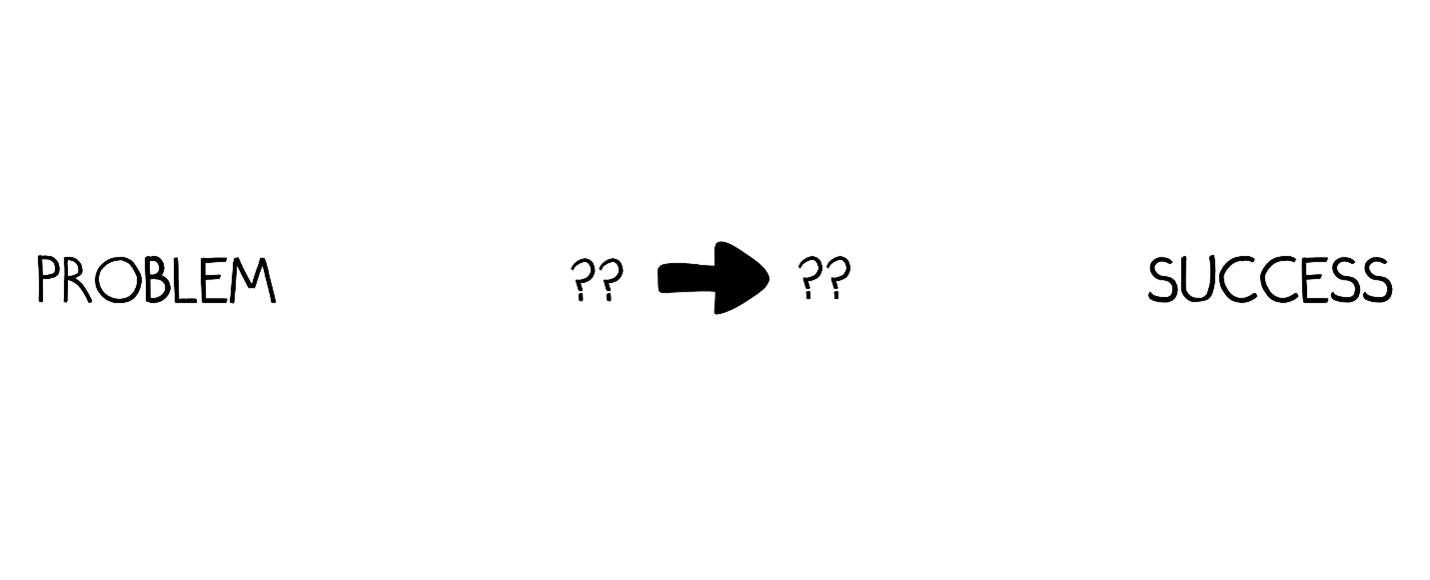
Organizations often focus immediately on potential solutions, but successful software projects take a different approach. They begin by understanding the problem, identifying what success looks like, and then designing the most valuable path forward.
At Emergent Software, we typically follow three key steps when helping organizations solve complex business challenges through custom software development.
Why Business Problems Require Thoughtful Solutions
A business problem can be defined as the gap between current reality and desired reality.
For example:
An application may be missing critical functionality.
Employees may spend excessive time performing manual tasks.
Systems may not communicate with one another.
Data may be difficult to access or report on.
Customers may be experiencing friction during key interactions.
Complex business problems rarely have a single obvious solution.
That's why effective software development requires a structured approach to problem solving.
Step 1: Understand the Problem
The first step is often the most important.
Before discussing technology, software architecture, or implementation strategies, it's essential to fully understand the problem itself.
Listen Before Designing
Organizations are experts in their own business challenges.
Successful software teams spend time listening, asking questions, and gaining a deeper understanding of the client's goals and pain points.
It can be tempting to immediately suggest a solution based on previous experience.
However, problems that appear similar on the surface often have very different underlying causes.
The more time spent understanding the situation, the more likely the final solution will deliver meaningful value.
Define What Success Looks Like
Understanding the problem is only half of the equation.
You also need to understand what success looks like.
Different stakeholders may define success differently.
A solution that technically works but fails to meet business expectations may still be considered unsuccessful.
Clearly defining success criteria creates alignment and helps guide future decisions.
Identify Requirements and Constraints
As discussions continue, two additional factors begin to emerge:
Requirements — capabilities the solution must provide.
Constraints — limitations the solution must operate within.
Examples of requirements might include:
Support for thousands of users
Integration with Salesforce
Regulatory compliance requirements
Examples of constraints might include:
Budget limitations
Project deadlines
Existing technology investments
These factors help narrow the range of possible solutions and create the framework for future decision making.
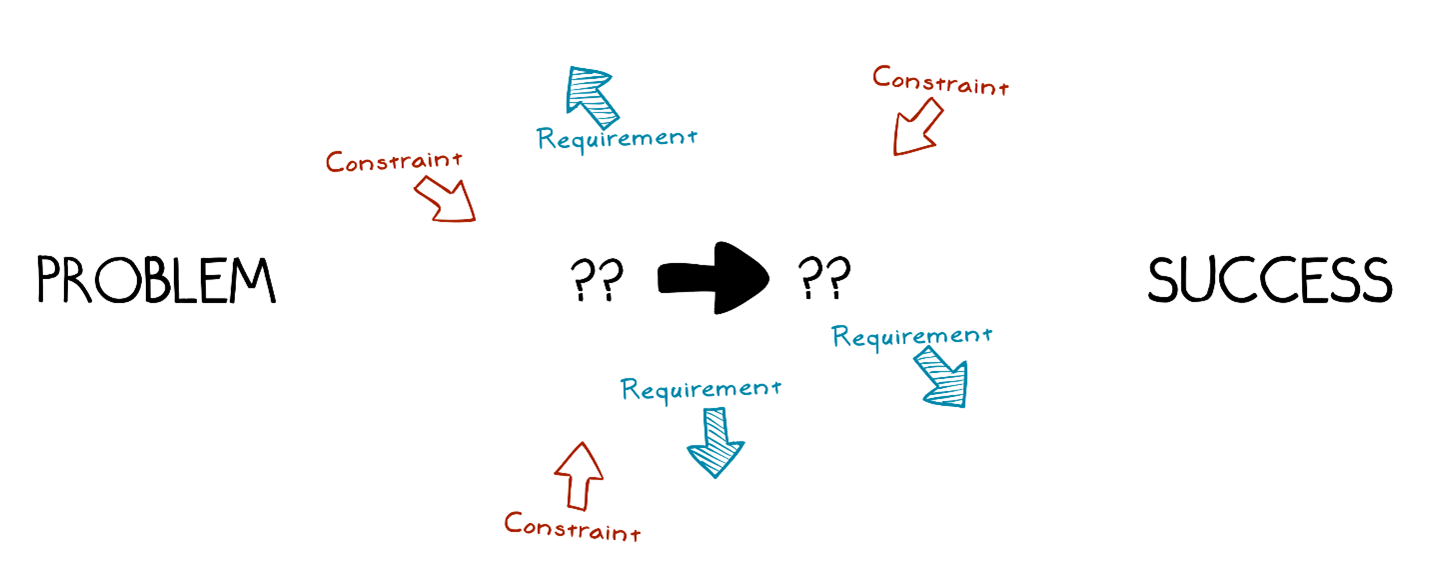
Only after understanding the problem, defining success, and identifying constraints should solution design begin.
Step 2: Design the Right Solution
Once the problem is understood, attention shifts toward designing a solution.
At first glance, this may sound straightforward.
Design a solution that solves the problem, satisfies requirements, and fits within constraints.
In reality, multiple solutions are often possible.
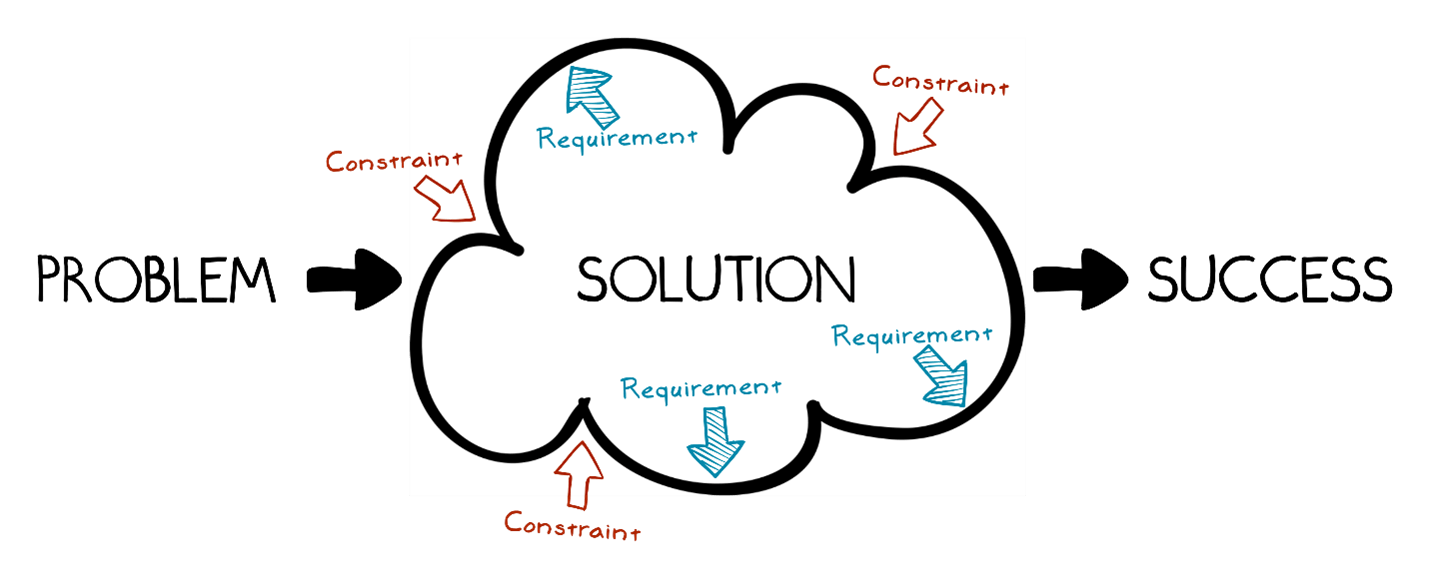
The challenge becomes identifying which solution provides the greatest value.
Experienced software architects and consultants often draw from a large toolbox of technologies, patterns, and approaches when evaluating options.
The goal is not to find a solution.
The goal is to find the best solution.
How Value Drives Better Decisions
When multiple valid solutions exist, value becomes the deciding factor.
One way to think about value is:

Impact measures how effectively a solution improves the client's situation.
A solution may solve the original problem while also creating additional benefits such as improved efficiency, better reporting, or enhanced customer experiences.
Cost includes all expenses associated with implementing and maintaining the solution.
This may include:
Development effort
Software licensing
Cloud infrastructure
Ongoing support
In some cases, an off-the-shelf platform may provide enough value.
In other situations, custom software delivers the greatest return because it aligns more closely with business needs.
Ultimately, value is determined by the client and their specific goals.
When several strong options exist, presenting multiple alternatives can help organizations make informed decisions.
Step 3: Build the Right Thing
After selecting a solution, the final step is implementation.
This is where ideas become working software.
Ensure the Team Understands the Goal
Everyone involved in development should understand:
The original problem
Success criteria
Requirements
Constraints
Development teams make countless decisions throughout a project.
Those decisions are more effective when grounded in a clear understanding of business objectives.
Break the Solution into Smaller Pieces
Large software initiatives are typically broken into smaller components.
These may include:
Epics
Features
User stories
Each component represents its own smaller problem that must be solved.
The same problem-solving process applies at every level.
This approach helps teams deliver value incrementally while maintaining alignment with the larger vision.
Validate Throughout Development
Validation is critical.
Throughout development, teams should continuously verify that the solution still aligns with requirements, constraints, and success criteria.
Validation often includes:
Automated testing
Quality assurance reviews
User acceptance testing
Stakeholder demonstrations
Continuous validation reduces risk and helps ensure the final product delivers the intended business outcome.
To learn more about this process, check out our guide to our custom software development process.
How Emergent Software Can Help
Emergent Software helps organizations solve complex business challenges through software discovery workshops, solution architecture, custom software development, application modernization, cloud services, and ongoing support. Our team works closely with stakeholders to understand business goals, identify the highest-value opportunities, and build solutions that deliver measurable results. If this sounds familiar, we can help.
Final Thoughts
Technology alone does not solve business problems.
The best software solutions begin with a deep understanding of the challenge, a clear definition of success, and a thoughtful evaluation of available options.
By focusing on understanding the problem, designing the right solution, and building the right thing, organizations can maximize the value of their software investments and achieve better business outcomes.
If you're facing a complex business challenge and want to explore how custom software can help, contact our team to start the conversation.
Frequently Asked Questions
What types of business problems can custom software solve?
Custom software can help solve a wide range of business challenges, including inefficient manual processes, disconnected systems, poor reporting, customer experience issues, and operational bottlenecks. Because custom solutions are designed around specific business requirements, they often provide greater flexibility than off-the-shelf software. The best solution depends on the organization's goals and constraints. A discovery process helps identify the right approach. Custom software is often most valuable when standard tools cannot fully address business needs.
Why is understanding the problem important before building software?
Without fully understanding the problem, teams risk building solutions that fail to address the actual business need. Understanding the problem helps define success criteria, identify requirements, and uncover constraints. This information guides better decision making throughout the project. It also reduces the likelihood of costly rework later. Strong discovery and planning improve project outcomes.
What is the difference between requirements and constraints?
Requirements define what a solution must do, such as supporting a specific number of users or integrating with another system. Constraints define limitations the solution must work within, such as budget, timeline, or regulatory requirements. Both influence solution design and implementation decisions. Understanding each helps narrow the range of viable options. Successful projects balance both requirements and constraints.
How do software teams determine the best solution?
Software teams evaluate multiple options and consider factors such as business impact, cost, technical feasibility, scalability, and long-term value. The goal is to identify the solution that delivers the greatest value for the organization. In some cases, custom software is the best choice. In others, existing platforms may provide sufficient value. The decision should be driven by business outcomes rather than technology preferences.
What is software discovery?
Software discovery is the process of understanding business goals, gathering requirements, identifying risks, and evaluating potential solutions before development begins. Discovery helps ensure stakeholders are aligned and creates a roadmap for implementation. It reduces uncertainty and improves project planning. Many successful software projects begin with a structured discovery engagement. Discovery is often one of the most valuable phases of the project lifecycle.
How does custom software development create business value?
Custom software can improve efficiency, automate processes, enhance customer experiences, increase visibility into operations, and support business growth. Because it is tailored to specific requirements, it often solves problems more effectively than generic solutions. The value depends on the impact achieved relative to the cost of implementation. Organizations typically realize the greatest value when software directly supports strategic objectives. A thoughtful development process helps maximize results.
Author



Let’s Start Building Together
Whether you're modernizing legacy apps, strengthening your cloud security, or planning your next big initiative, Emergent Software is here to help.