

How One Video Game’s Approach to Development Can Apply to Your Custom Software Product
March 25, 2021
In This Blog
TL;DR
Successful software products continue evolving long after their initial release.
The popular game Phasmophobia provides a great example of effective product management and customer engagement.
Kinetic Games uses a public Trello board to organize features, bugs, and product enhancements.
Transparency can strengthen customer relationships and improve product direction.
Businesses can learn valuable lessons about feedback, prioritization, and product roadmaps from this approach.
When most people think about video games, they probably think about classics like Tetris and Mario or modern blockbuster titles like Call of Duty and Minecraft.
Occasionally, however, a smaller independent game captures the attention of the gaming world and becomes an unexpected success story.
One recent example is Phasmophobia, the popular ghost-hunting game developed by Kinetic Games.
At first glance, a video game might seem like an unusual topic for a software development company's business blog.
But behind the game's success is an excellent example of product management, customer engagement, and iterative software development.
The Kinetic Games team has implemented a product strategy that many businesses could learn from when managing their own software products.
Why Software Products Need Continuous Improvement
Before looking at what Kinetic Games is doing particularly well, it's helpful to discuss how we think about software products in general.
At Emergent Software, we often encourage organizations to think of custom applications as products rather than projects.
The distinction matters.
Projects typically have:
A defined beginning
A defined end
Temporary objectives
Products are different.
Products exist to create ongoing business value by serving a customer base.
That customer may be:
An external customer
An employee
An executive team
A department within your organization
Regardless of who the customer is, successful products evolve over time.
Customer expectations change. Technology changes. Market conditions change.
Software products must evolve as well.
This creates several important challenges:
How do you prioritize future enhancements?
How do you gather customer feedback?
How do you organize development efforts?
How do you ensure your roadmap remains aligned with customer needs?
These are difficult questions for any product team.
Kinetic Games offers an interesting example of how to address them.
The Importance of the Initial Release
Every software product begins somewhere.
We often refer to that starting point as the Initial Release.
One of the biggest mistakes organizations make is attempting to build every possible feature before launching a product.
This frequently delays time to market and increases project risk.
The Phasmophobia team took a different approach.
Rather than attempting to build every conceivable feature before launch, they focused on delivering a compelling core experience.
The game launched with enough functionality to provide value to players while leaving room for future growth and enhancements.
This reflects a classic Minimum Viable Product (MVP) strategy.
The MVP approach allows organizations to:
Launch sooner
Gather real-world feedback
Validate assumptions
Reduce development risk
Prioritize future investments more effectively
Once the product reaches customers, teams can begin learning what users actually want rather than relying entirely on assumptions.
This feedback becomes the foundation for future development.
Using a Public Product Management Board
One of the most interesting aspects of Kinetic Games' product management strategy is its use of a public Trello board.
Their public roadmap allows players to see exactly how the team organizes features, bug fixes, and product enhancements.
Each idea is tracked as a ticket and managed through a Kanban-style workflow.
The process generally looks like this:
Backlog — New ideas are collected, evaluated, discussed, and prioritized.
To Do — Selected items are approved for development.
In Progress — The development team actively works on the feature.
Next Beta Update — Completed items move into beta testing.
Done — Features become part of the stable production release.
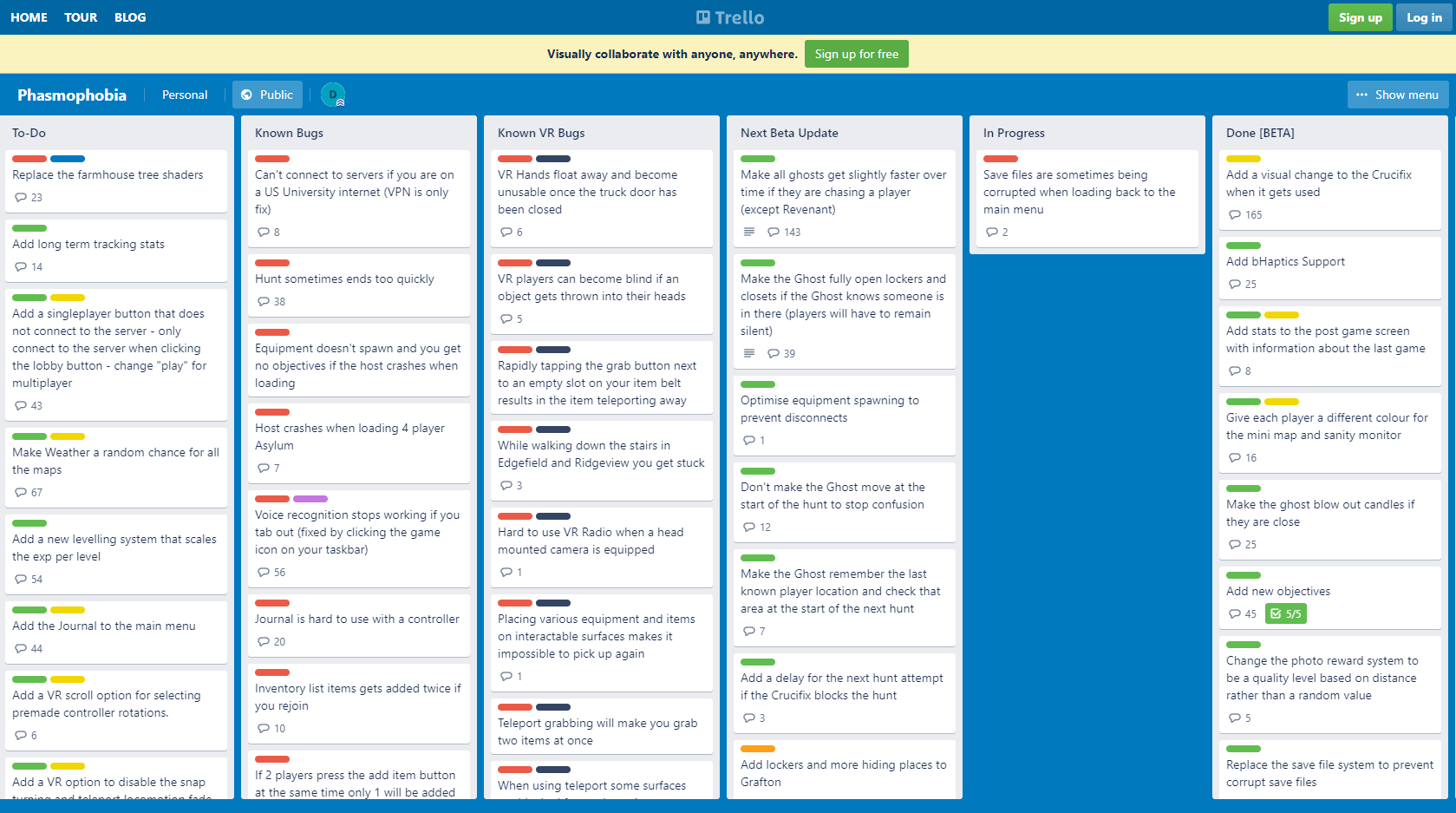
This approach creates an intuitive system for both internal teams and customers.
Internally, developers gain visibility into priorities and work status.
Externally, customers gain visibility into the future direction of the product.
Regardless of the specific product management framework your organization uses, this provides a strong example of how transparency can support product development.
How Transparency Improves Customer Feedback
The public roadmap does more than organize work.
It also creates an ongoing conversation between the development team and the customer community.
Traditionally, customer feedback often disappears into:
Support inboxes
Feedback forms
Feature request portals
Customers submit ideas but rarely know what happens next.
Kinetic Games takes a different approach.
Players can see:
Which ideas are being considered
What is currently being developed
What has been completed
How priorities are changing
This visibility creates a stronger connection between the product team and its users.
Customers feel heard because they can see how feedback influences development.
The development team gains direct insight into customer sentiment without relying solely on formal surveys or expensive market research.
There are certainly risks to this level of transparency.
Public comments require moderation. Customer expectations must be managed carefully. Not every suggestion can be implemented.
However, the benefits often outweigh the challenges.
The result is a highly engaged community that actively participates in shaping the future of the product.
Lessons Businesses Can Learn from Phasmophobia
While most businesses are not developing video games, there are several valuable lessons that apply to virtually any software product.
Launch valuable functionality sooner.
Your initial release does not need to contain every feature on your wish list. Focus on solving meaningful problems and delivering value quickly.
Embrace transparency when possible.
Helping customers understand your roadmap can improve trust, engagement, and overall satisfaction.
Create a process for managing feedback.
Customer feedback is only valuable if it can be organized, prioritized, and acted upon effectively.
Treat software as an evolving product.
The work doesn't end at launch. Successful products continuously adapt to changing customer needs and market conditions.
These principles apply whether you're building software for customers, employees, partners, or internal business users.
If you're interested in learning more about our own software development philosophy, check out our custom software development process.
How Emergent Software Can Help
Emergent Software helps organizations build, launch, and continuously improve software products through custom software development, product strategy, cloud solutions, and long-term support services. We work closely with clients to establish roadmaps, gather feedback, prioritize enhancements, and ensure software investments continue delivering business value long after launch. If this sounds familiar, we can help.
Final Thoughts
The success of Phasmophobia demonstrates that effective product management isn't limited to large organizations with massive budgets.
Sometimes the most effective strategies are also the simplest.
Launching early, listening to customers, maintaining transparency, and continuously improving the product can create remarkable results.
Whether you're managing a customer-facing application or an internal business platform, treating software as an evolving product rather than a one-time project often leads to better long-term outcomes.
If you'd like to discuss your own software product strategy, reach out to our team. We'd love to learn more about your goals.
Frequently Asked Questions
What is product management in software development?
Product management is the process of planning, prioritizing, developing, and improving a software product over time. Product managers work to balance customer needs, business goals, technical constraints, and market opportunities. Effective product management helps ensure development efforts focus on delivering meaningful value. It also provides a framework for gathering and acting on customer feedback. Successful products evolve continuously rather than remaining static after launch.
What is a Minimum Viable Product (MVP)?
A Minimum Viable Product, or MVP, is the simplest version of a product that delivers meaningful value to users. Rather than building every planned feature upfront, teams focus on core functionality and release sooner. This allows organizations to gather real-world feedback and validate assumptions. MVPs help reduce risk and accelerate learning. Many successful software products begin with an MVP approach.
What is a product backlog?
A product backlog is a prioritized list of features, enhancements, bug fixes, and ideas that may be implemented in a software product. The backlog serves as a planning tool that helps teams organize and prioritize future work. Items are continuously reviewed and reprioritized based on business needs and customer feedback. A healthy backlog supports ongoing product evolution. Most Agile teams use some form of backlog management.
What is Kanban?
Kanban is a workflow management methodology that visualizes work as it moves through different stages of development. Teams often use boards with columns such as Backlog, To Do, In Progress, and Done. Kanban helps improve visibility, reduce bottlenecks, and communicate status. It is commonly used in software development and product management. Many organizations find Kanban intuitive and easy to adopt.
Why is customer feedback important for software products?
Customer feedback helps organizations understand how users interact with their products and where improvements are needed. Feedback can reveal pain points, validate assumptions, and identify opportunities for innovation. Products that continuously incorporate customer input often deliver greater value over time. Feedback also helps prioritize development efforts. Ultimately, customer insights are one of the most valuable inputs for product decision making.
Should businesses make their product roadmap public?
There is no single answer, but increased transparency can offer significant benefits. Public roadmaps can improve customer engagement, build trust, and demonstrate that feedback is being considered. However, organizations must also manage expectations and carefully communicate priorities. The appropriate level of transparency depends on the business, industry, and product. Many organizations find that sharing at least some roadmap information creates stronger customer relationships.
Author



Let’s Start Building Together
Whether you're modernizing legacy apps, strengthening your cloud security, or planning your next big initiative, Emergent Software is here to help.