

In This Blog
TL;DR
The discovery phase helps define project goals, requirements, technical considerations, and implementation strategies before development begins.
Discovery reduces project risk by ensuring all stakeholders have a shared understanding of the solution.
Organizations gain clarity around scope, features, timelines, costs, and technical approaches.
Discovery often uncovers opportunities, risks, and requirements that were not initially considered.
A successful discovery engagement creates a roadmap that guides the entire project.
Custom software projects are rarely simple.
Unlike manufacturing a physical product that can be reproduced repeatedly, every software project involves unique business requirements, processes, stakeholders, technologies, and goals.
Many organizations begin a project with a general idea of what they want to build but may not yet have a complete picture of how the solution should work.
That's where the discovery phase comes in.
The discovery phase allows organizations and development teams to explore requirements, understand business objectives, identify risks, and create a clear plan before development begins.
Think of it as creating a roadmap before starting a long journey.
What Is the Discovery Phase?
The discovery phase is the process of gathering information, defining requirements, understanding business goals, and identifying the best approach for solving a problem before software development begins.
During discovery, development teams work closely with stakeholders to understand:
Business objectives
User needs
Technical requirements
System integrations
Project constraints
Potential risks
The goal is not simply to gather requirements.
The goal is to fully understand the business context so the right solution can be designed.
If you review our software development process, you'll notice that discovery occurs before active development begins.
The discovery phase typically takes place during the pre-execution discovery and planning stages, where requirements are gathered, priorities are defined, and technical approaches are evaluated.
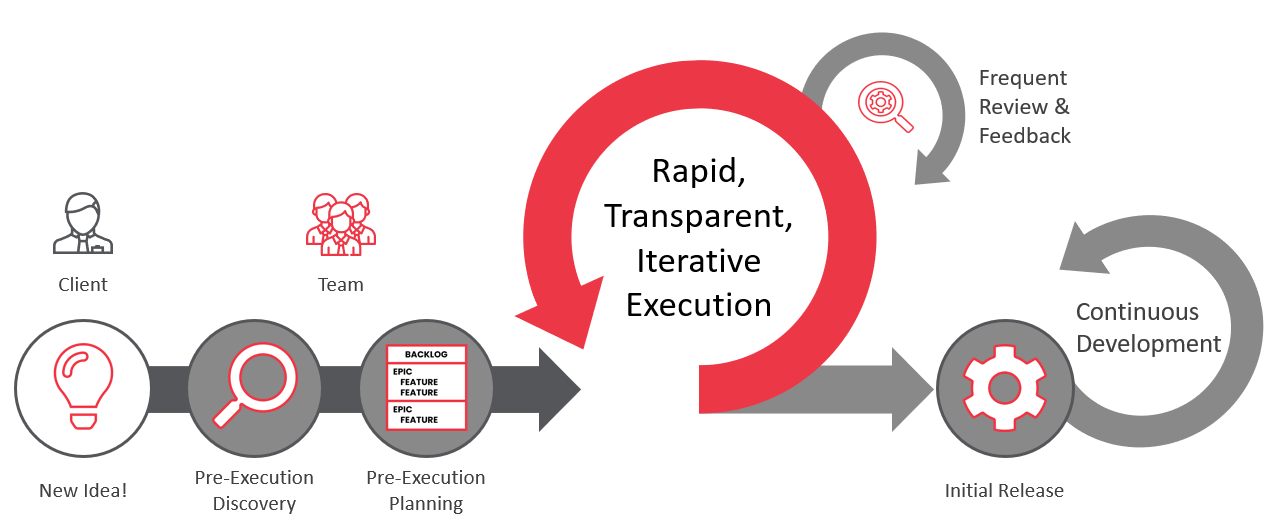
Before development teams begin building software, they need a clear understanding of the destination. Discovery provides that roadmap by helping all stakeholders align on goals, requirements, and success criteria.
Why Discovery Matters
Many organizations initially believe they already know exactly what they want to build.
However, software projects almost always contain hidden assumptions, unanswered questions, and opportunities for improvement.
In our experience, it is extremely rare for a project to emerge from discovery exactly as it entered.
That's because discovery helps uncover:
Additional requirements
Alternative technical approaches
Potential risks
Budget considerations
Feature priorities
Implementation tradeoffs
By addressing these items early, organizations can make better decisions before significant development investment occurs.
The Purpose of a Discovery Engagement
The discovery phase serves several important purposes.
It helps both the client and development team align on expectations and create a shared understanding of the project.
A successful discovery engagement typically helps:
Clearly define project goals and objectives
Validate assumptions and requirements
Identify the best technical solution
Understand limitations and tradeoffs
Break large ideas into manageable features
Create a roadmap for execution
Establish shared terminology and processes
Discovery also allows experienced architects, engineers, analysts, and project leaders to contribute their expertise before development begins.
This often helps organizations identify opportunities they may not have considered on their own.
Benefits for Clients
Organizations that invest in discovery often realize significant benefits throughout the project lifecycle.
Lower Initial Financial Commitment
Discovery allows organizations to better understand project costs before committing to a full implementation.
This helps improve budgeting and planning.
A Clear Roadmap
One of the most valuable outcomes of discovery is a documented roadmap that outlines the recommended approach.
This roadmap can guide development regardless of who ultimately performs the work.
Access to Experienced Technical Advisors
Discovery provides direct access to experienced professionals who can help evaluate requirements, identify risks, and recommend solutions.
These conversations often uncover opportunities for improvement that might otherwise be missed.
More Complete Requirements
Many projects begin with high-level ideas.
Discovery helps transform those ideas into detailed requirements and actionable plans.
This significantly reduces uncertainty moving forward.
Benefits for the Development Team
Discovery benefits the delivery team as well.
When teams begin projects with better information, they are better positioned to deliver successful outcomes.
Stronger Client Relationships
Discovery creates opportunities to build trust, establish communication patterns, and better understand client goals.
This foundation often contributes to stronger long-term partnerships.
Faster Project Execution
Projects that complete discovery typically spend less time clarifying requirements during development.
This allows teams to focus more on delivery and less on rework.
Better Resource Planning
Discovery helps development firms identify:
Required skill sets
Specialized expertise
Project complexity
Resource requirements
This enables better staffing decisions and more accurate project planning.
What Happens During Discovery?
Every discovery engagement is different, but most include some combination of:
Stakeholder interviews
Requirements gathering workshops
Process mapping
Technical architecture discussions
Feature prioritization exercises
Risk identification
Roadmap development
Depending on the project, discovery may focus heavily on business requirements, technical architecture, user experience design, or all three.
The process is tailored to the organization's needs and the maturity of the project idea.
Some organizations enter discovery with a detailed vision while others are still exploring possibilities.
Both approaches can benefit from the structured planning that discovery provides.
How Emergent Software Can Help
Emergent Software helps organizations turn ideas into actionable plans through software discovery workshops, solution architecture engagements, application assessments, roadmap development, and custom software consulting. Our team works closely with stakeholders to understand business goals, identify opportunities, and create clear implementation plans that reduce risk and improve project outcomes. If this sounds familiar, we can help.
Final Thoughts
Discovery is one of the most important phases of a successful software project.
It helps organizations gain clarity, reduce uncertainty, validate assumptions, and create a roadmap for success.
While it may be tempting to jump directly into development, investing time in discovery often saves significant time, money, and frustration later.
The better you understand the destination, the easier it becomes to build the right solution.
If you're exploring a software project and want help defining the best path forward, contact our team to start the conversation.
Frequently Asked Questions
What is the discovery phase in software development?
The discovery phase is a planning and requirements-gathering process that occurs before software development begins. It helps organizations define business goals, understand technical requirements, identify risks, and create a roadmap for implementation. Discovery allows stakeholders and development teams to align on expectations before significant development work starts. The process reduces uncertainty and improves project planning. It is often one of the most valuable phases of a project.
Why is the discovery phase important?
Discovery helps organizations avoid costly mistakes by validating assumptions and identifying requirements early. It creates a shared understanding between stakeholders and development teams while helping uncover opportunities, risks, and alternative approaches. Projects that complete discovery often experience fewer surprises during implementation. The process improves planning and decision-making. It helps maximize the value of development investments.
How long does a discovery phase typically take?
The length of a discovery engagement depends on the size and complexity of the project. Smaller projects may require only a few workshops and planning sessions, while larger initiatives may involve multiple weeks of analysis and collaboration. The goal is not speed but clarity. Discovery should provide enough information to confidently move into development. The timeline varies based on project requirements.
What deliverables come out of a discovery engagement?
Discovery deliverables often include requirements documentation, feature lists, technical recommendations, architecture guidance, project roadmaps, risk assessments, and implementation plans. The specific outputs depend on the goals of the engagement. These deliverables help guide future development efforts. They also provide a valuable reference for stakeholders and project teams. Clear documentation improves project alignment.
Can discovery help estimate project costs?
Yes. One of the key benefits of discovery is gaining a better understanding of project scope, complexity, and requirements. This information helps development teams create more accurate cost and timeline estimates. Organizations can make more informed decisions about budgeting and prioritization. Discovery often improves estimate accuracy significantly. Better estimates reduce project risk.
Do all software projects need a discovery phase?
While the level of discovery may vary, nearly every software project benefits from some form of upfront planning and analysis. Even projects with well-defined requirements often uncover additional considerations during discovery. The process helps ensure alignment and reduces the likelihood of misunderstandings later. Larger and more complex projects typically benefit the most. Discovery is generally considered a software development best practice.
Author



Let’s Start Building Together
Whether you're modernizing legacy apps, strengthening your cloud security, or planning your next big initiative, Emergent Software is here to help.