

In This Blog
TL;DR
Successful custom software projects are built through an iterative process focused on business value.
Emergent Software prioritizes work using epics, features, user stories, and acceptance criteria.
Development follows a continuous cycle of prioritization, definition, building, testing, demonstration, and feedback.
Client collaboration throughout the process helps reduce risk and improve outcomes.
Software development often continues after launch through ongoing enhancements and support.
In part one of this series, we discussed how our approach to custom software development combines Agile principles with practical business realities.
We covered why software projects are inherently uncertain and how iterative development helps organizations reduce risk while delivering value faster.
But what actually happens once development begins?
How do we take an idea and transform it into a working software solution?
At Emergent Software, we follow a feature-focused iterative development process that allows us to deliver functionality quickly, gather feedback early, and continuously improve the product throughout development.
Let's take a closer look at what happens during each stage of that process.
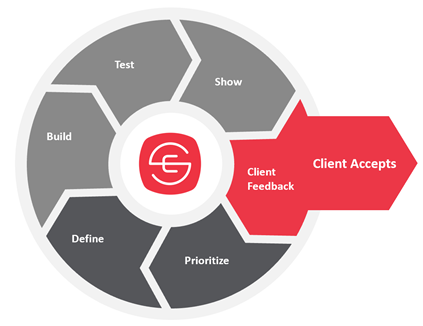
Figure 1: The iterative process we follow to ensure we are building the right solution quickly and with continuous client feedback.
A Quick Recap of Part One
Before diving into the details, it's important to remember the overall philosophy behind our development process.
Rather than attempting to define, build, test, and deploy an entire application at once, we break projects into smaller pieces that can be prioritized, developed, reviewed, and refined incrementally.
This approach allows us to:
Reduce project risk
Deliver value sooner
Adapt to changing requirements
Gather feedback throughout development
Avoid costly late-stage surprises
The process revolves around four key steps that repeat throughout the project lifecycle.
Step 1: Prioritize
The first step is determining what should be built first.
We organize project work into epics, which are major areas of business value, and then break those epics into individual features.
For example, an ecommerce application might include an epic focused on online purchasing.
Within that epic, individual features could include:
Shopping cart functionality
Checkout workflows
Payment processing
Order confirmation systems
The next step is determining which features should be developed first.
This prioritization is driven primarily by your business goals.
However, our team may also recommend prioritizing higher-risk or technically complex features early in the project to reduce uncertainty.
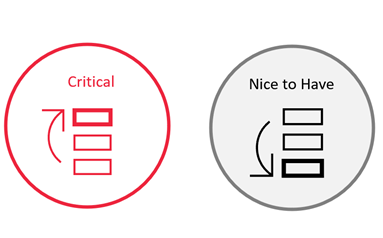
Figure 2: Features can represent critical functionality or nice-to-have enhancements.
Within each feature, we further classify functionality as either:
Critical
Nice to Have
This allows us to focus first on the functionality that creates the greatest business value.
The result is often a Minimum Viable Product (MVP), which provides enough functionality to begin delivering value and gathering user feedback.

Figure 3: Each feature contains critical and nice-to-have functionality that can be prioritized independently.
By focusing on the most valuable functionality first, organizations often reach a usable solution much sooner than traditional development approaches allow.
Compare that to older project methodologies that attempt to define and deliver everything at once.
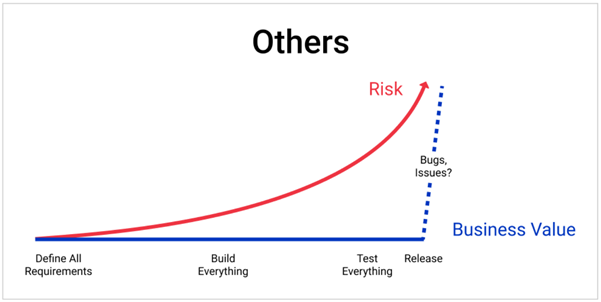
Figure 4: Large all-at-once delivery approaches often create additional risk, delays, and budget concerns.
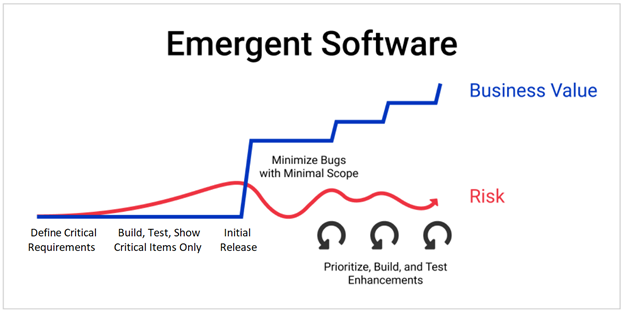
Figure 5: Iterative, speed-to-value development helps minimize risk while accelerating delivery.
Step 2: Define the Work
Once priorities are established, we need to clearly define what success looks like.
This is where acceptance criteria come into play.
Acceptance criteria help answer two critical questions:
What are we trying to accomplish?
Why is it important?
Understanding both the desired outcome and the business context behind it helps ensure the development team is solving the correct problem.
We then translate requirements into user stories, which describe the specific pieces of functionality needed to satisfy the acceptance criteria.
One important point is that clients do not need to have every detail figured out before development begins.
In fact, many successful projects evolve significantly throughout the development process.
What matters most is understanding the business objectives and collaborating closely throughout the project.
When defining requirements, we encourage clients to focus on:
Clearly explaining what they need
Providing business context and rationale
Differentiating between needs and wants
Sharing how current processes work
We've occasionally discovered features that clients initially believed were critical but later found were rarely or never used.
Those discoveries save both time and money while allowing resources to be redirected toward higher-value functionality.
Step 3: Build, Test, Show
Once priorities and requirements are defined, development begins.
However, unlike traditional development approaches that may spend months building before stakeholders see results, our process emphasizes rapid delivery and continuous visibility.
As features are completed, we:
Build the functionality
Test it thoroughly
Demonstrate it to stakeholders
This ongoing review process allows clients to see progress early and often.
Rather than waiting until the end of the project to discover whether a feature meets expectations, feedback can be gathered immediately.
This approach creates:
Greater transparency
Faster decision making
Reduced project risk
Better alignment with business needs
Frequent demonstrations help ensure the project stays on track while creating opportunities to refine requirements as new information emerges.
Step 4: Feedback & Accept
One of the most valuable parts of iterative development is the ability to gather feedback continuously.
Once stakeholders see a working feature, new ideas often emerge.
That's normal.
In many cases, it's difficult to fully understand how a feature should behave until users can interact with it directly.
As feedback is gathered, we help determine whether requested changes are:
Critical requirements
Nice-to-have enhancements
Some improvements may be simple enough to implement immediately.
Others may become future roadmap items.
Depending on the project, we may also use:
Clickable prototypes
User testing sessions
A/B testing
Pilot releases
These techniques help validate assumptions before broad deployment.
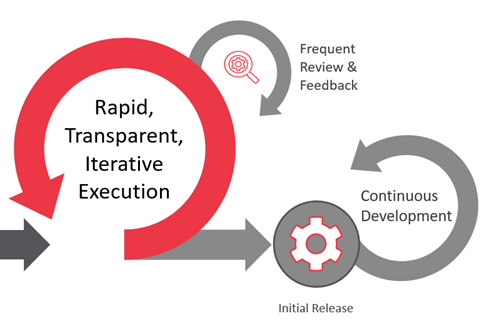
Figure 6: Continuous testing and feedback drive ongoing improvement throughout the development lifecycle.
What Happens After Go Live?
Many people assume software development ends when the application launches.
In reality, launch is often just the beginning.
Some applications require minimal ongoing investment.
Others continue evolving for years.
After launch, organizations often focus on:
New feature development
User feedback incorporation
Performance improvements
Security enhancements
Technology upgrades
That's why we offer a variety of ongoing support and continuous development options that help clients continue improving their software after the initial release.
Whether you need a long-term dedicated team or occasional support, our goal is to remain a trusted technology partner throughout the life of your application.
We also encourage organizations to continuously evaluate their product roadmap. If you'd like to learn more, check out our article on why product roadmaps should be flexible, not fixed.
How Emergent Software Can Help
Emergent Software helps organizations plan, build, launch, and continuously improve custom software solutions through Agile development, cloud services, data engineering, application modernization, and managed support services. Our collaborative development process focuses on delivering business value quickly while maintaining flexibility throughout the project lifecycle. If this sounds familiar, we can help.
Final Thoughts
Building custom software successfully requires more than technical expertise.
It requires collaboration, transparency, prioritization, and a willingness to adapt as new information becomes available.
Our iterative development process helps clients reduce risk, accelerate value delivery, and stay actively involved throughout the project.
If you're considering a custom software project and want a partner that focuses on business outcomes as much as technology, reach out to our team. We'd love to learn more about your goals.
Frequently Asked Questions
What is an epic in Agile development?
An epic is a large body of work that delivers meaningful business value and can be broken into smaller features or user stories. Epics help organize development efforts around business objectives rather than technical tasks. They provide a high-level view of project goals. Most software projects contain multiple epics. Teams use epics to manage large initiatives more effectively.
What is a user story?
A user story is a short description of functionality from the perspective of the end user. User stories help development teams understand what needs to be built and why it matters. They provide context for feature development and support Agile planning processes. Well-written user stories focus on outcomes rather than technical implementation. They serve as building blocks within larger features and epics.
What are acceptance criteria?
Acceptance criteria define the conditions that must be met for a feature or user story to be considered complete. They help establish clear expectations between stakeholders and development teams. Acceptance criteria reduce ambiguity and improve quality. They also support testing and validation efforts. Well-defined acceptance criteria are critical for successful project delivery.
What is a Minimum Viable Product (MVP)?
A Minimum Viable Product is the simplest version of a product that delivers meaningful value to users. MVPs focus on essential functionality while postponing lower-priority enhancements. This approach allows organizations to launch sooner and gather real-world feedback. MVPs help reduce risk and improve prioritization. Many successful software products begin as MVPs.
Why is iterative development important?
Iterative development allows teams to build software in smaller increments while continuously gathering feedback. This approach reduces risk by validating assumptions throughout the project. Stakeholders gain visibility into progress and can influence outcomes earlier. Changes become easier to manage and less expensive to implement. Iterative development often leads to higher-quality software and better business outcomes.
Does software development stop after launch?
Usually not. Most software products continue evolving after launch through enhancements, optimizations, security updates, and new functionality. Ongoing development helps organizations respond to changing customer needs and market conditions. Many businesses treat software as a long-term product rather than a one-time project. Continuous improvement often delivers the greatest long-term value from software investments.
Author



Let’s Start Building Together
Whether you're modernizing legacy apps, strengthening your cloud security, or planning your next big initiative, Emergent Software is here to help.